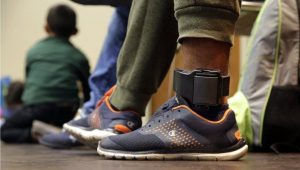

Bail monitoring is the operational layer that proves a released defendant is honoring geographic rules, curfews, and no-contact boundaries while a case moves through court. When judges and surety stakeholders need continuous location accountability, programs rely on a modern GPS ankle bracelet stack—hardware, LTE backhaul, geofencing logic, and tamper semantics that survive evidentiary scrutiny. This guide explains why bail monitoring matters in 2026, five evidence-backed electronic monitoring benefits, how to choose GPS versus RF, and what procurement teams should demand before signing multi-year bail bond GPS tracking contracts.
For program design context, start with our bail monitoring solutions overview, the pretrial EM 2026 guide, and ankle monitor cost guide. Product depth for release dockets lives on CO-EYE ONE and low-touch supervision on CO-EYE AMClient. To scope devices, alert policies, and integration, Contact Sales or Request Quote.
What Is Bail Monitoring and Why It Matters in 2026
Bail monitoring describes supervised-release oversight—usually vendor-operated—ordered as a bond condition or pretrial services rule. Unlike a passive check-in call, continuous bail bond GPS tracking answers where someone was, when they approached an exclusion zone, and whether strap integrity changed.
That distinction matters because courts increasingly expect map-grade logs when prosecutors allege violations. Stakeholders span judges, clerks, pretrial officers, surety agents, and monitoring center supervisors. Each group reads the same event stream differently: judges want clarity for revocation hearings; agencies want fewer false alarms; defendants need understandable charging routines.
Strong surety supervision programs align those needs with written orders that specify maps, hours, exceptions, and escalation paths—so later disputes focus on facts, not vague expectations.
How supervised release aligns with pretrial EM programs
Pretrial electronic monitoring is the umbrella term for court-ordered technology supervision before disposition. Surety-funded straps often sit inside that umbrella when a commercial bond or assigned risk pool pays vendor fees. The stack is familiar: cellular reporting, inclusion and exclusion zones, tamper codes, and audit trails.
For statutes and workflows, see our pretrial electronic monitoring 2026 guide. Where orders span both court-run pretrial services and vendor centers, clarify which agency owns master data to avoid duplicate alerts.
Five Proven Benefits of Bail Monitoring
Agencies adopt GPS-based surety supervision for operational and public-safety reasons. The following five benefits recur in court reports, county budgets, and supervision research—especially when programs pair reliable hardware with trained alert handling.
1. Reduced failure-to-appear (FTA) rates
Location visibility changes behavior: defendants know missed zones and curfew breaches create contemporaneous records. While every jurisdiction measures FTA differently, supervision leaders consistently report that structured electronic supervision correlates with better court appearance compliance when paired with reminders, transportation assistance, and clear maps.
Your program should define what constitutes an FTA versus a technical dropout so hearings are not fought over carrier gaps or handset reboots mistaken for absconding.
2. Cost savings versus detention
Jail bed-days are among the most expensive lines in criminal-justice budgets. Fully loaded detention is commonly cited well above one hundred dollars per day in many U.S. counties once staffing, medical, and capital costs are included.
Supervision fees for community release tracking typically fall in a much lower daily band—often discussed in roughly five to twenty-five dollars per day depending on strap modality, victim-notification features, and service tiers—making release supervision arithmetic compelling when public-safety rules still require accountability. Use our ankle monitor cost guide to build transparent TCO models for commissioners.
3. Public safety and victim-distance logic
Domestic violence and stalking dockets increasingly require exclusion buffers around schools, workplaces, and protected addresses. A purpose-built GPS ankle monitor program encodes those polygons, not just point radii, so officers receive approach alerts with timestamps suitable for protective orders.
Florida’s 2026 domestic-violence package (HB 277) illustrates how legislatures are formalizing electronic monitoring definitions and court authority—always confirm enrolled text and effective dates with local counsel before operationalizing new duties.
4. Defendant accountability with clearer rules
Written orders that translate into map rules reduce ambiguity. Defendants can see inclusion corridors for work and treatment; officers can explain why a breach triggered. Bail bond GPS tracking works best when charging expectations, cradle locations, and escalation contacts are documented at intake.
Accountability is procedural fairness plus sensor evidence—not surveillance for its own sake. Plain-language orientation packets reduce accidental violations during the first seventy-two hours after release.
5. Court compliance and audit-ready reporting
Revocation and bond-forfeiture proceedings require chain-of-custody discipline for location fixes, tamper flags, and officer acknowledgments. Modern supervision platforms export hearing packets that separate GPS dropout from strap compromise.
California’s SB 437 debate shows how large states are pushing GPS-capable supervision as a default pathway for defined defendant cohorts—another signal that documentation standards for pretrial electronic monitoring are tightening nationally. Legislative trackers also cited similar GPS supervision language advancing across fourteen states during 2026 sessions.
GPS vs RF Monitoring for Bail: When to Use Each
Not every order requires continuous satellite fixes. RF home beacons answer a narrow question—whether the strap is near an approved residence during curfew hours. Ankle-worn GPS deployments answer route reconstruction, victim-distance buffers, and variable work sites. Many agencies blend modalities: GPS-primary for high-risk releases, RF or smartphone checks for lower-risk tiers.
Choose bail bond GPS tracking when the written order mentions exclusion zones, multi-stop employment, or school proximity. Choose RF home monitoring when the only question is overnight presence and the defendant’s risk profile is stable. Hybrid programs should specify which modality is authoritative if alerts conflict.
For RF-centric home detention stacks paired with GPS releases, review bail monitoring solutions and hardware pages that match your docket mix. Document handoffs between day-shift and night-shift supervisors so duplicate callbacks do not desensitize defendants to real breaches.
Cellular sunset and device refresh
Legacy 2G and 3G straps are a liability: carriers retire bearers on business timelines, not court calendars. Specifying LTE-M or NB-IoT (and GSM fallback where still available) extends fleet life.
This is a procurement item, not a footnote—your RFP for bail monitoring should ban obsolete modems and require a published sunset remediation plan from the vendor.
Technology Requirements for Court-Grade Supervision
Procurement committees should translate court orders into objective acceptance tests. The following requirements appear in mature pretrial electronic monitoring and surety programs.
Real-time tracking and store-and-forward
Near-real-time reporting supports exclusion-zone timeliness; offline buffering prevents data holes when cellular momentarily drops. Demand explicit semantics for what “real time” means in seconds or minutes, not marketing adjectives.
Geofencing and schedule rules
Inclusion corridors for employment, polygonal exclusion zones for protected persons, and holiday exceptions should be configurable without vendor ticket queues. Bail bond GPS tracking contracts often fail on inflexible rule engines, not raw GNSS sensitivity.
Tamper alerts with defensible codes
Strap cuts, case attacks, and charge anomalies must emit distinct event codes. Fiber-optic tamper paths can reduce ambiguous vibration false positives—important when prosecutors rely on supervision logs in contested hearings.
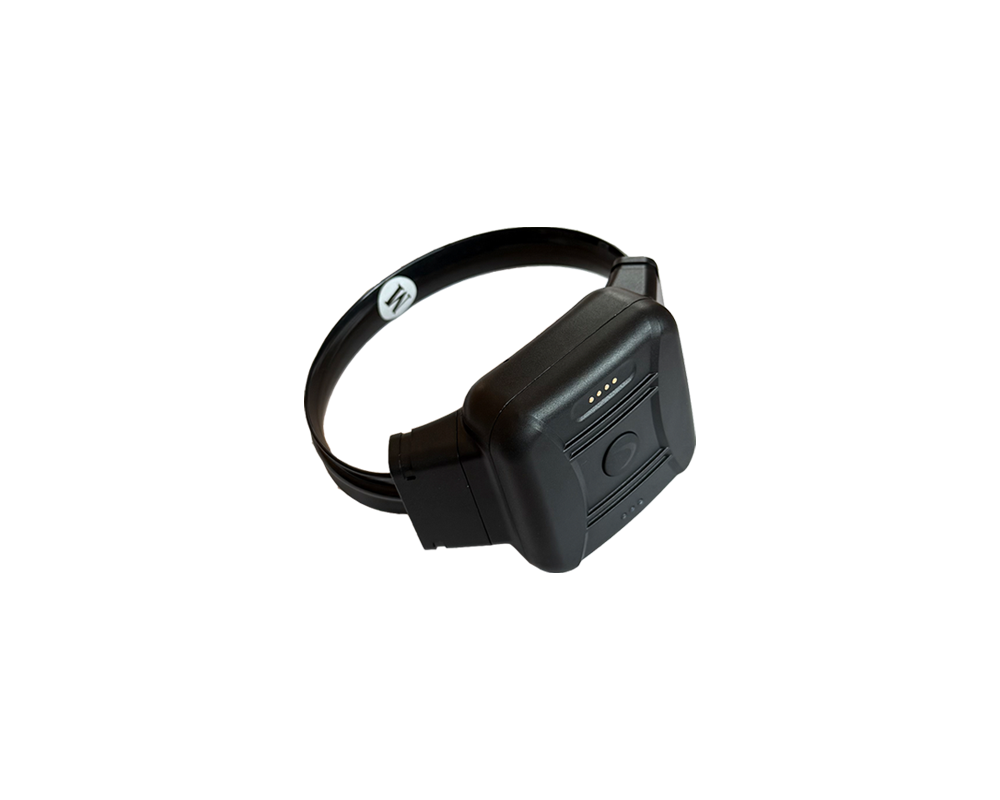
CO-EYE ONE combines fiber-optic strap and case tamper sensing in a one-piece GPS ankle monitor form factor engineered for programs that adjudicate tamper events in open court.
Court-ready reports and role-based access
Exportable PDFs, time-zone fidelity, and supervisor sign-offs belong in the baseline. If multiple agencies share a caseload, clarify data ownership and retention up front.
Alert Fatigue, Staffing, and Quality Assurance
Even excellent hardware fails when alert queues overwhelm night staff. Tier alerts by severity: victim-proximity breaches and confirmed tampers should outrank low-confidence speed anomalies. Require vendors to supply drill scripts so new hires practice adjudication weekly.
Measure time-to-acknowledgment for each tier and publish internal service levels. When agencies miss repeated acknowledgments, defendants learn that breaches lack consequences—undermining the entire bail monitoring investment.
Defense discovery and data minimization
Defense counsel increasingly requests raw logs. Contracts should specify what metadata is retained, how long location history persists, and how exports are authenticated for court filings. Minimize ancillary collection unrelated to the written order to reduce discovery battles.
Align retention schedules with state rules and county policy; qualified EM platform vendors should support legal holds without accidental purge jobs.
How Bail Bond Agencies Select Monitoring Equipment
Surety-facing agencies should treat vendor selection as a three-year operations decision, not a strap commodity buy. Start with docket mix: high-intensity GPS releases need lighter hardware and longer battery autonomy than legacy two-piece kits.
Evaluate charging logistics—programs with frequent cradle visits see higher noncompliance that masquerades as violations. Request references from jurisdictions with similar order language. Pilot small cohorts on standardized alert playbooks before scaling.
Compare total program cost: hardware lease, cellular, software seats, training, and replacement spares. Our CO-EYE ONE page lists specifications agencies use in scorecards—weight, dimensions, battery life, tamper method, and cellular bands.
Why CO-EYE ONE fits intensive bail monitoring
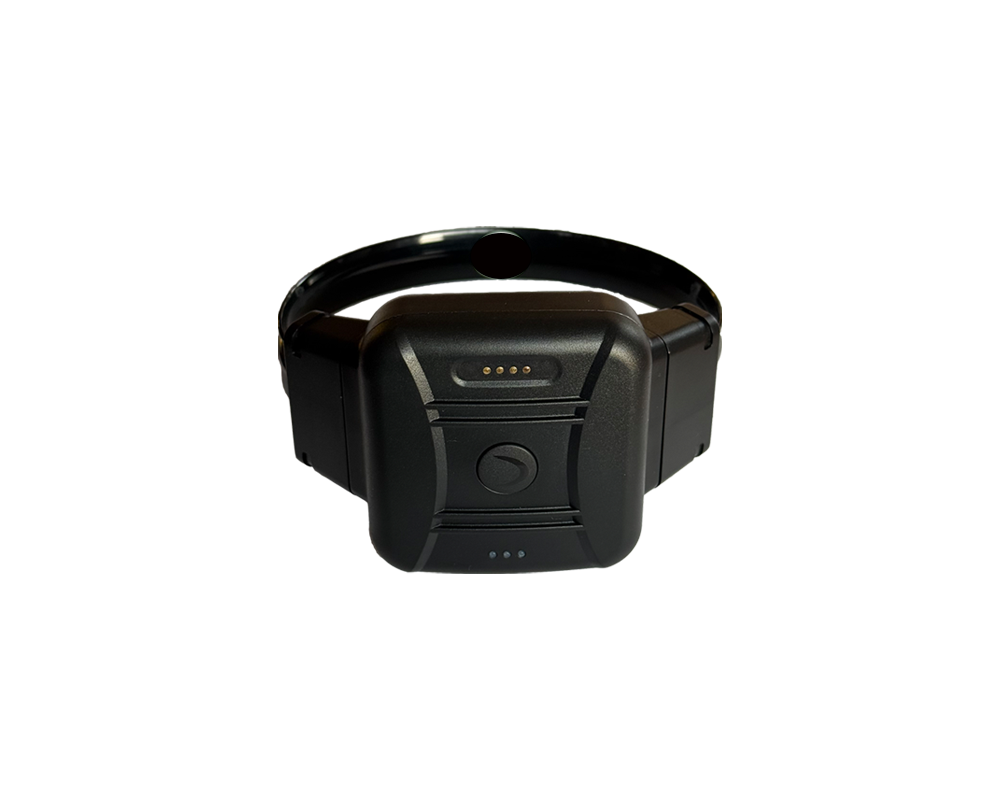
CO-EYE ONE is a one-piece GPS ankle monitor at about 108 grams and roughly 60×58×24 mm, reducing wearer complaints that otherwise drive strap-offs. Up to seven days of standalone battery life on LTE-M/NB-IoT at a five-minute reporting interval shrinks charging visits and supervisor workload.
Tool-free, sub-three-second installation speeds intake lines during busy booking windows. Fiber-optic tamper detection targets zero false-positive tamper events—critical when courts admit supervision logs as evidence.
GNSS performance targets under two meters in open sky, with Wi-Fi and LBS assistance in urban canyons. IP68 supports shower and weather exposure. 5G-compatible LTE-M/NB-IoT plus GSM aligns with modern carrier roadmaps.
CO-EYE AMClient for lower-risk supervision paths
Not every release requires a strap. For low-risk cohorts, smartphone accountability with tethered Bluetooth checks can satisfy certain orders when counsel and the court agree. CO-EYE AMClient supports continuous supervised smartphone workflows that complement—not replace—strap programs when risk profiles allow.
Cost Analysis: Bail Monitoring vs Detention
County leaders increasingly ask for per-day comparisons. While jail accounting varies, aggregate reports frequently place fully loaded detention costs around one hundred dollars per day or higher.
Supervision fees for bail monitoring and related bail bond GPS tracking services typically cluster far lower—often cited in the single-digit to mid-twenties per day range before volume discounts—so each supervised day can represent substantial savings when release is legally appropriate.
Savings should never outrank safety: the analysis is valid only when risk tools and order conditions align. Pair financial models with victim-notification requirements where statutes mandate them. Detailed line-item templates appear in our ankle monitor cost guide.
Evidence Base: Florida Electronic Monitoring Study
Supervision research commonly cites Florida findings on electronic monitoring: monitored cohorts showed roughly a thirty-one percent reduction in recidivism risk relative to comparison groups in the study design referenced across NIJ summaries and state policy memos.
Use the statistic carefully—it describes a specific empirical context, not a universal guarantee. The procurement takeaway is structural: when monitoring is paired with swift, consistent responses, measurable outcomes improve compared to unmonitored comparators.
2026 Legislative Expansion: HB 277, SB 437, and Multi-State Momentum
Legislative watchers tracked GPS-capable supervision language moving through at least fourteen states in 2026 sessions. Florida HB 277 modernizes domestic-violence-related electronic monitoring definitions and court authority, including GPS and RF modalities—verify enrolled text for pilot timelines and cost rules.
California SB 437 exemplifies West Coast restructuring toward GPS-first pretrial supervision for defined non-violent felony cohorts, shifting procurement volume to vendors who can scale LTE-native fleets. Procurement officers should read enrolled statutes—not headlines—before changing standard orders.
Align vendor contracts with new definitions of electronic monitoring, payer-of-record clauses, and data retention duties so GPS supervision invoices match statutory assignments of financial responsibility.
Implementation Checklist for Courts and Agencies
Before your next vendor RFP for surety GPS programs, confirm cellular bands against your national carrier mix; publish a tamper adjudication playbook; map charging logistics against battery specs; and train night staff on escalation.
Link supervision data exports to your case management conventions so prosecutors receive consistent packets. When you are ready to evaluate hardware, review CO-EYE ONE specifications, AMClient for smartphone paths, and bail program overview.
Use Contact Sales or Request Quote for fleet sizing—REFINE Technology does not offer free trials or demo devices as a policy matter; commercial pilots follow quote-based procurement.
NIJ Standards Context for Procurement Committees
Agencies often cite NIJ Standard 1004.00 concepts when comparing vendor accuracy disclosures. The standard helps teams ask consistent questions about horizontal accuracy under defined test profiles—not to guarantee a single number in every urban canyon.
Use it as a checklist during bake-offs: insist on documented test methods, antenna placement, and how vendors classify assisted versus autonomous fixes. Pair those disclosures with your own field trials on courthouse steps, parking structures, and typical commute corridors.
When bail monitoring evidence moves toward revocation, judges appreciate narratives that separate device limitations from willful noncompliance. A disciplined NIJ-informed evaluation makes that separation easier.
Finally, document how your monitoring center timestamps officer reviews. That metadata often matters as much as the raw latitude-longitude string when credibility is contested.
Frequently Asked Questions
What is bail monitoring? Bail monitoring uses supervised-release technology—commonly a GPS ankle monitor—to verify that a released defendant complies with geographic rules, curfews, and court orders while a case is pending.
How does bail bond GPS tracking reduce jail costs? Supervised release trades expensive detention bed-days for lower daily program fees when risk profiles and court orders make community supervision appropriate—often discussed as roughly five to twenty-five dollars per day for monitoring versus a hundred dollars or more per day for jail.
Is a GPS ankle monitor always required? No. Some orders allow RF home monitoring or smartphone accountability. GPS ankle monitor programs are appropriate when continuous location proof or victim-distance zones are required.
What tamper features should courts require? Distinct tamper codes for strap, case, and charging anomalies—with fiber-optic sensing where agencies need to minimize false positives in hearings.
How do 2026 bills like HB 277 affect programs? Florida HB 277 updates domestic-violence-related electronic monitoring authority and definitions; California SB 437 illustrates GPS-first pretrial expansion—always confirm effective dates and local administrative rules.
Where can agencies get pricing for CO-EYE devices? Use the Contact Sales or Request Quote forms on ankle-monitor.com to reach REFINE Technology for commercial quotes and integration questions.