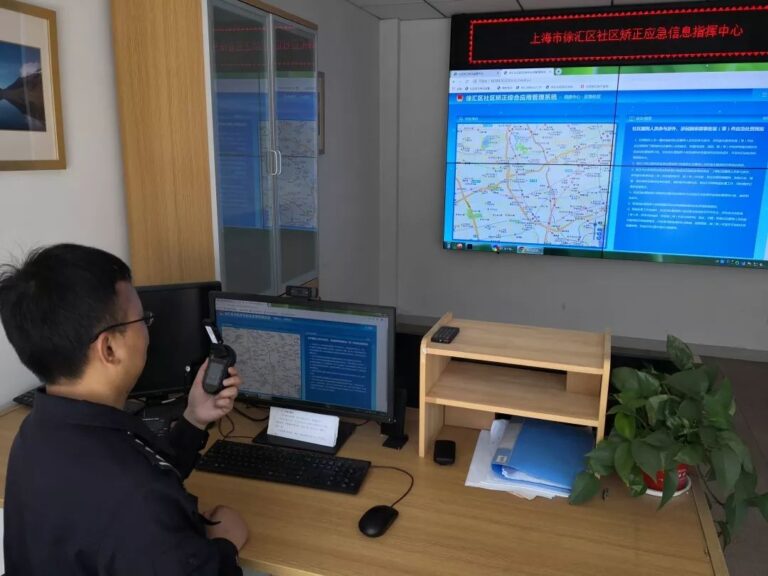
On June 10, 2026, South Korea’s National Police Agency and Ministry of Justice announced a ₩4.203 billion ($3 million) project to merge their electronic monitoring systems into a single, real-time integrated platform — scheduled for completion by December 2026. The announcement came three months after a 44-year-old man wearing a GPS ankle monitor murdered his […]
A probation officer in Oklahoma opens her dashboard. Three scheduled biometric check-ins came through overnight — each showing a clear selfie of the defendant, matching enrollment photos, passing the liveness detection prompt. Location data shows the phone at the defendant’s registered address. Everything looks clean. But the defendant hasn’t been at that address in 72 […]
On May 28, 2026, the Indianapolis Star published an investigation that should force every electronic monitoring stakeholder to confront an uncomfortable truth: a GPS ankle monitor — a device designed to track location — led to the amputation of an asylum seeker’s leg in Indiana. The bracelet gripped his left ankle so tightly that it […]
On May 21, 2026, Florida Governor Ron DeSantis signed House Bill 277 into law — and buried inside its 30 pages of penalty enhancements and protective-order reforms is a provision that should have every electronic monitoring equipment vendor, corrections agency, and victim advocate paying attention: America’s first dedicated GPS ankle monitor pilot program for domestic […]
“It’s not being taken seriously until somebody’s life is lost.” Eight years after her sister was killed by an intimate partner in Calgary, a woman’s plea to CBC News cuts through every policy debate about domestic violence prevention. Her grief frames a question that corrections agencies across North America increasingly answer with technology: can GPS […]
Between August 2024 and May 2026, three separate murder suspects in Texas removed their court-ordered GPS ankle monitors and disappeared. One fled the country. One hid under his grandmother’s floorboards for a month. One killed someone else during the 103 days he spent as a fugitive. These are not edge cases. They represent a systemic […]
Two events this week crystallized the central tension defining criminal justice technology in 2026. Cook County’s Board of Commissioners is weighing a $1.12 million contract with BriefCam — a Canon-owned AI video analytics platform — to deploy automated surveillance at one of America’s largest jails. Simultaneously, RAND released its AI Taxonomy for Criminal Justice for […]
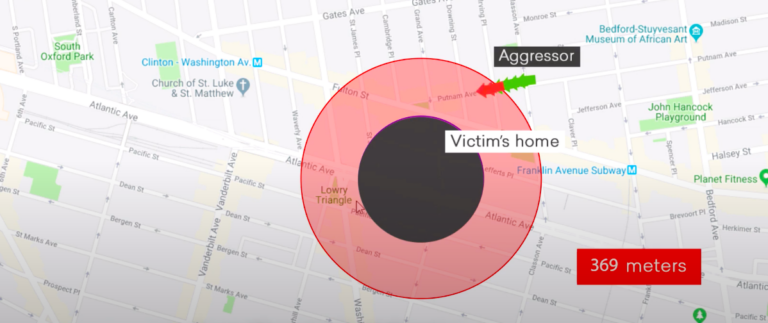
A survivor in a basement apartment checks her phone for the third time tonight. No alerts — but that might mean the system is working, or it might mean her ex-husband found a cellular dead zone three blocks away and is approaching undetected. For her, the difference between those two scenarios is the difference between […]
A federal judge in the Southern District of Texas issues a standing order requiring attorneys to certify that no AI-generated content in their filings was used without human verification. Across the Atlantic, the Law Society of New South Wales convenes its most intensely debated panel in years on AI adoption. Meanwhile, legal scholars at Lawfare […]
A probation officer reviews a caseload of 80 offenders. Each one generates a GPS fix every five minutes—that is 1,152 data points per person per day, or 92,160 across the caseload. Scroll through any monitoring dashboard and the problem is obvious: thousands of dots moving across a map, but no narrative, no pattern, no intelligence. […]